If you’re a British expat, you probably keep an eye on the pound’s value, sometimes with a bit of worry, because when it changes, your real wealth changes too.
Over the past decade, the pound has changed a lot. Sometimes the changes were slow and quiet; other times, they were sudden and surprising. The overall impact on savings held in different currencies has been significant, but often goes unnoticed.
Let’s look at what's really happened to the pound since the mid-2010s, what it means for money kept in sterling, and what anyone with finances in more than one currency can learn from it.
The decade in sterling, briefly
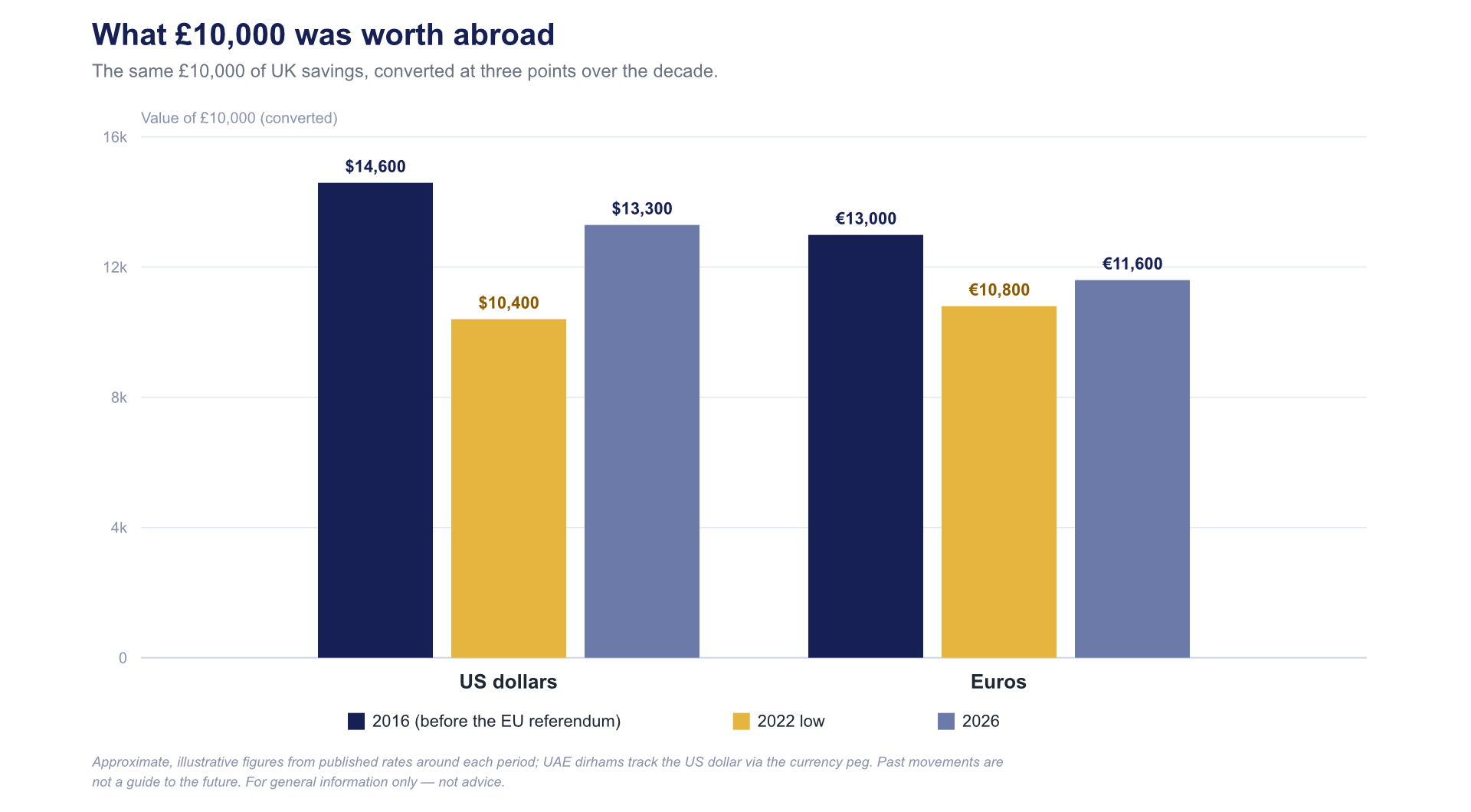
The 2016 EU referendum was the turning point. Before the vote, the pound was worth about $1.46. Within months, it dropped sharply, and it has never returned to those levels. What seemed like a sudden shock at the time became a lasting shift to a lower and more unpredictable range.
The next big shock came during the market turmoil around the September 2022 "mini-budget." Sterling briefly dropped to about $1.03, its lowest level against the dollar ever. It bounced back from that low, but the event reminded everyone that currencies can change quickly and without much warning.
Today, the pound is about $1.33 and around €1.16. This is an improvement from the 2022 low, but it is still well below where it started the decade. It is about 9% weaker against the dollar than before the 2016 referendum, and even weaker against the euro. For anyone holding pounds and spending in other currencies, that difference matters.
What that did to £10,000 sent abroad
Percentages feel more real when you actually convert money. For example, if you moved £10,000 overseas:
Into US dollars: It would have bought around $14,600 before the 2016 referendum. At the September 2022 low, the same £10,000 fetched barely $10,400. Today it's around $13,300.
Into euros: Roughly €13,000 a decade ago, versus about €11,600 today.
Into UAE dirhams (which are pegged to the US dollar, so they track it): About AED 53,600 before the referendum, dropping to roughly AED 38,200 at the 2022 low, and around AED 48,800 today.
Look at those numbers again. A Gulf-based expat who converted £10,000 of savings at the wrong time in 2022 got about AED 15,000 less than they would have in 2016, even though the pound amount was the same. That’s how much timing and currency rates matter, and it is much more than the interest most cash savings earn.
The double hit expats often miss
Currency is only part of the picture. The other part is inflation, and together they can eat away at your savings from both directions.
Over the same decade, UK prices rose by about a third, with a big jump in 2022 and 2023 when inflation briefly hit double digits. This means that money left in a low-interest sterling account didn’t just risk losing value when sent abroad—it was also quietly losing buying power at home.
It’s the same problem we discussed in our article on what your salary is really worth: if your cash isn’t earning more than inflation, it’s losing value in real terms.
For expats, these two forces can add up. If you keep your savings in pounds but your expenses are in dirhams or euros, both a weaker pound and inflation at home can reduce what your money will buy—a double hit that people saving only in the UK don’t really experience.
Why this matters more when you live abroad
A UK resident earns, saves, and spends in one currency, so exchange rates usually matter only when travelling. An expat’s financial life is different.
You might earn in one currency, keep savings in another, and plan to spend in a third. Having a large amount of cash in just one currency, whether it’s all in pounds or your local currency, is basically a bet on that currency, even if you didn’t plan it that way.
The risk is highest during big, one-time conversions that are common in expat life, like bringing an end-of-service gratuity home, moving money from a property sale, funding a pension, or transferring a lump sum when returning to the UK. If your timing is unlucky on a large sum, as 2022 showed, the change in currency value alone can cost more than years of careful saving.
The lesson (which isn't "time the market")
This isn’t advice to try to predict the pound. No one can do that reliably, and after the 2022 low, the pound recovered in a way few expected.
The real lesson is simpler and more practical: decide in advance how much of your savings should be exposed to any one currency, so one move in the pound doesn’t decide everything.
In practice, this means thinking carefully about which currency your savings are in compared with where you’ll spend them, planning big conversions instead of leaving them to chance, and making sure your money is earning enough to keep up with inflation instead of just sitting in cash.
These are the main ideas in our articles about the cost of moving money and managing your currency exposure, and they matter much more to an expat’s long-term wealth than the daily exchange rate.
The pound will keep moving as it has all decade, sometimes sharply and in ways no one can predict. What you can control is how much of your savings is exposed when that happens.
If you’d like help reviewing how your savings are spread across currencies and whether they’re working hard enough, talk to Holborn Assets.
All information contained in this article was correct at the time of publication. This article is for informational purposes only and is not financial advice. For personal financial advice, always speak to a regulated professional.
Don’t just take our word for it...
We’re rated ‘Excellent’ on Trustpilot, based on thousands of verified reviews from real client experiences