Wills and trusts are two common estate planning tools. The main difference between the two is when they take effect.
A will only takes effect after you die, while a trust can take effect during your lifetime. Also, wills go through probate, whereas trusts can help avoid it, making it more straightforward and faster to distribute your assets.
Understanding how both work can help you protect your legacy and provide peace of mind for your loved ones. Below, we explore how they differ and which might be right for you.
At a glance - wills vs trusts
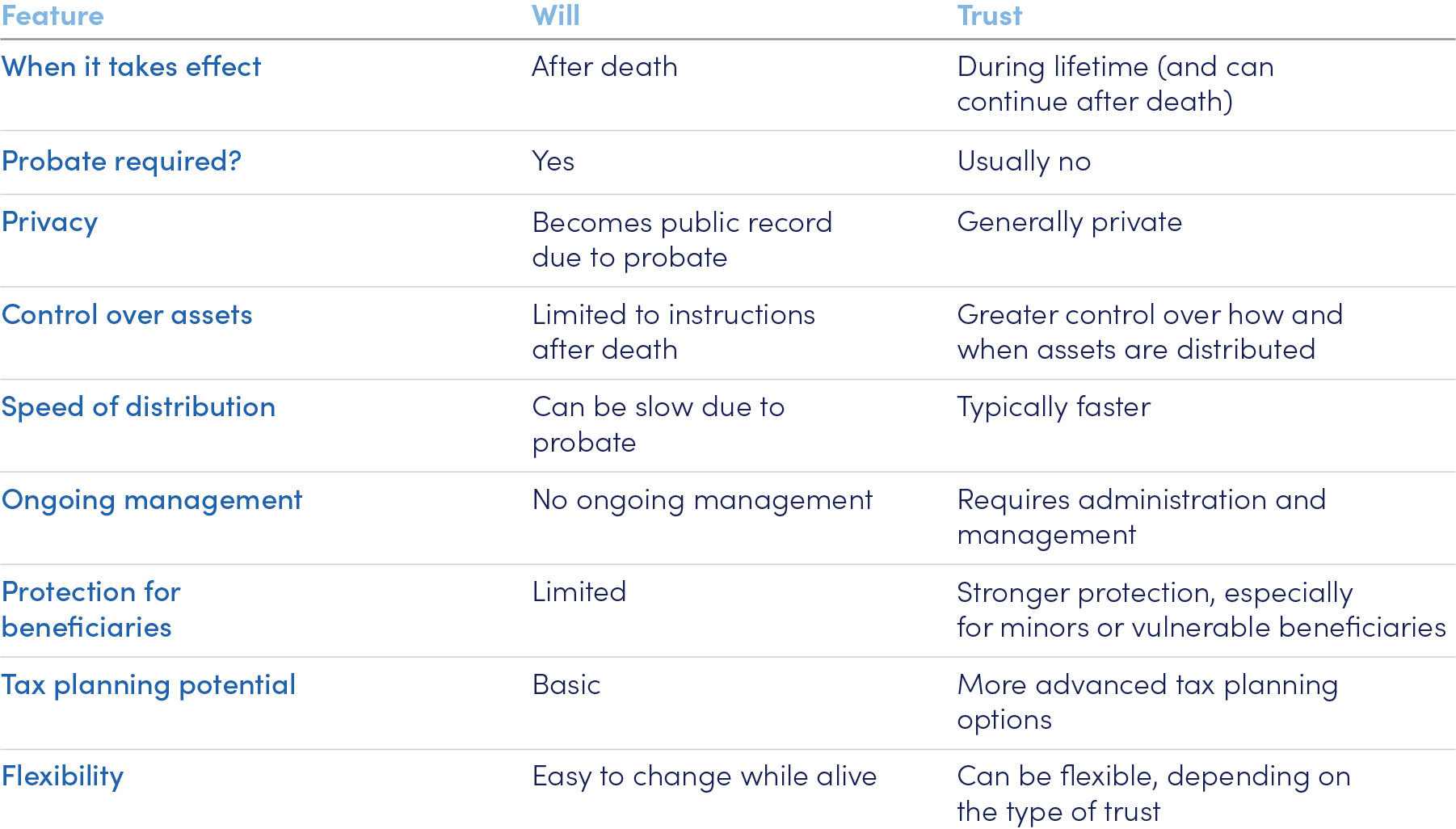
Here's a quick breakdown of the main differences between a will and a trust:
What is a will?
A will is a legal document. It outlines how your assets should be distributed after your death. It's one of the most common estate planning tools and is essential for most people.
Key features of a will:
Let's you name the people you want to inherit your assets
Appoint the person who will carry out your wishes (executor)
Allows you to name guardians for minor children
Must go through probate—a legal process where the court validates the will
Only takes effect after you die
Wills are the foundation of a comprehensive estate plan. However, because they go through probate, there are often delays. If you live and work abroad, you should check if your UK will is valid overseas.
What is a trust?
A trust is a legal arrangement that handles the management and distribution of your assets. Trusts can take effect during your lifetime or after your death.
Key features of a trust:
Can be set up to take effect before or after death
Can help you reduce the likelihood of an estate going through probate or being contested
Can reduce your inheritance tax (IHT) bill
Maintains privacy since trusts aren't public record
Can be either revocable or irrevocable
The most commonly used trusts are written into the individual's will, but there are multiple types of trusts used in estate planning. And while trusts are more complex and cost more to set up than wills, they offer greater control and flexibility.
A mistake people often make is thinking that a trust is only for wealthy people. However, trusts are helpful for anyone who wants to simplify estate transfer and avoid court involvement.
Key differences between a will and a trust
The main differences between a will and a trust are:
Timing: A will only kicks in after you pass away, while a trust can manage your assets during your lifetime and after.
Probate: Wills must go through probate, a public court process. Assets held in trusts generally avoid this, saving time and legal costs.
Privacy: Wills become public record once they're filed in probate. Trusts remain private and confidential.
Cost: While wills are cheaper to create, trusts can help reduce your estate tax and overall expenses by avoiding lengthy probate and contested estates.
Control: Trusts typically offer more control over how your assets are managed and distributed.
Communication: Setting up a trust while you are still alive can lead to conversations with loved ones to help explain the whys, who and how's. In practice, this is often not the case and can lead to disputes.
Overall, the difference between wills and trusts comes down to timing, privacy and control.
Pros and cons of a will
✅Pros:
Quick and affordable to create
Allows you to name legal guardians for minor children
Sets out a clear plan for distributing your assets
❌Cons:
Must go through probate
Wills that go through probate court become a public document
Assets are not protected from creditors
Can be contested, leading to delays
Pros and cons of a trust
✅Pros:
Avoids probate and delays
Keeps your affairs private
Offers control over your assets during your life and after death
Provides several tax benefits
❌Cons:
More complex and costly to set up
Typically needs to be 'funded' by transferring assets into it (although some do not)
Potential tax costs if the trust is not set up properly
Do I need a will or a trust (or both)?
Many people assume they have to choose between a will and a trust. In reality, you may benefit from having both.
A will is essential if you:
Have young children and need to appoint a guardian
Want to name an executor to carry out your wishes
Have assets that are generally not advised to be placed into a trust
A trust is a good idea if you:
Want to avoid probate
Value privacy and efficiency
Want to protect your assets
Own real estate in multiple countries
Want to reduce estate taxes
Wills or trusts: which one is right for you?
Wills and trusts are both valuable estate planning tools, but they serve different purposes.
To sum up:
A will helps after you're gone
A trust helps now and later
By understanding the difference between a will and a trust, you can make smart decisions about how to protect your family, your assets, and your legacy.
If you're thinking about setting up your estate plan, speak to a qualified estate planner to decide what strategy is right for you.
Holborn Assets is a leading, award-winning financial services provider. We offer a comprehensive range of estate planning services and expert advice tailored to your needs and circumstances.
Speak to Holborn to learn how we can help you prepare for tomorrow and secure your legacy.

Financial planning with Holborn?
Holborn can help you make way more money than you have now.
All information contained in this article was correct at the time of publication. This article is for informational purposes only and is not financial advice. For personal financial advice, always speak to a regulated professional.
Don’t just take our word for it...
We’re rated ‘Excellent’ on Trustpilot, based on thousands of verified reviews from real client experiences